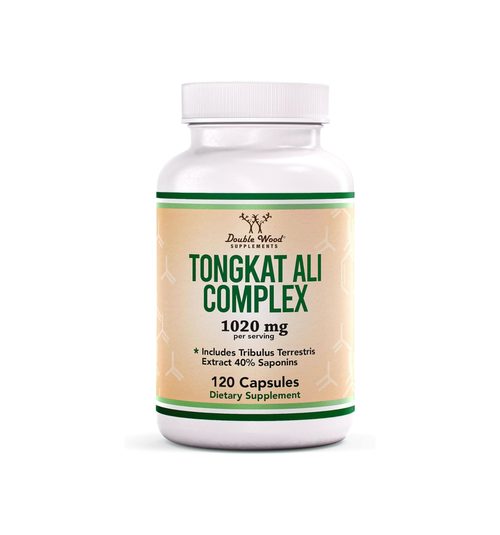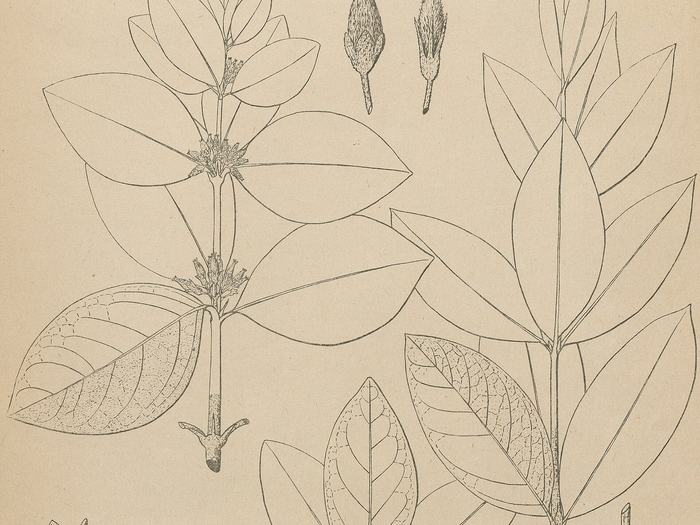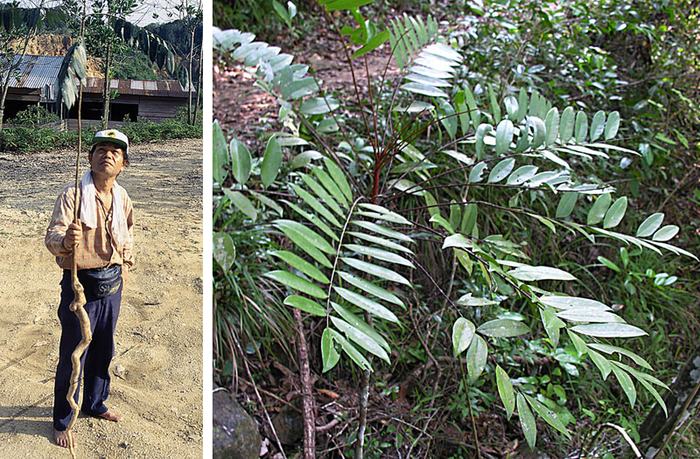
Tongkat Ali is one of the clearest examples on this site of why milligram count alone doesn't tell you much. Two products can both say "1,000mg" and deliver wildly different amounts of the actual active compounds, depending on numbers most buyers skip past. It's also a category where the gap between marketing and research is wider than most, so it's worth going in with clear expectations.
What Is Tongkat Ali?
Tongkat Ali (Eurycoma longifolia) is a slender tree native to the rainforests of Southeast Asia — Malaysia, Indonesia, Thailand, and Vietnam. Its root has been used in traditional medicine across the region for generations, most famously as a tonic for men's energy, stamina, and vitality, and also for fever and general wellbeing. The name roughly translates from Malay as "Ali's walking stick," a reference to its reputation as a men's tonic.
Its compounds of interest include quassinoids — especially eurycomanone, the marker compound most often used to standardize extracts — and small protein fragments called eurypeptides.
What the Research Actually Looks At
- Testosterone: the most-marketed use. Human studies have mostly looked at men with low or borderline-low testosterone, or older men, and some reported increases over several weeks. Results in young men with normal levels are less clear, and Tongkat Ali is not a substitute for medical evaluation of low testosterone.
- Stress: a small number of studies looked at stress hormones and mood in moderately stressed adults, reporting reductions in cortisol and improvements in self-reported mood.
- Libido and sexual health: the traditional use; a few small studies report improvements, with the usual caveats about size and quality.
- Exercise and body composition: studied in a handful of small trials with mixed results.
A notable detail is that much of the positive human research used specific, patented water-extracted products rather than generic root extracts — so results depend heavily on what's actually in the capsule.
Extraction Ratios vs. Eurycomanone: What to Trust on a Label
Raw Tongkat Ali root powder is a weak source of its active compounds, so almost every product uses a concentrated extract. There are two ways labels describe strength:
| Label says | What it means | How much to trust it |
|---|---|---|
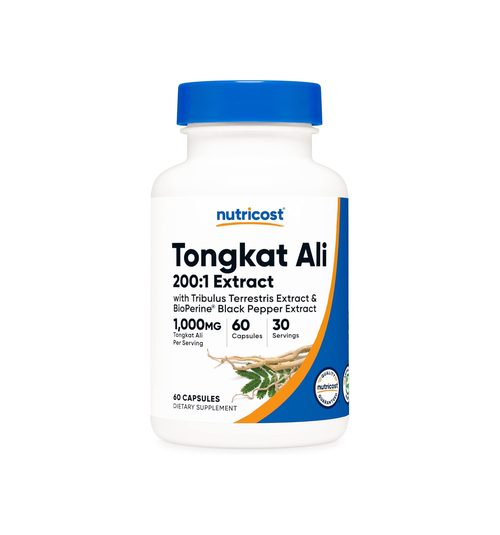
| "200:1 extract" | Concentrated from 200× its weight in raw root | Useful for comparing, but it's a manufacturing claim — very high ratios are hard to verify and aren't standardized between suppliers |
| "Standardized to 1–2% eurycomanone" | A measured amount of the marker compound | More reliable — this is a testable number |
| Branded/patented extract named | A specific extract used in published studies | Most reliable way to match what was studied |
| "Tongkat Ali root 1,000mg" only | Could be raw powder | Least useful — potency unknown |
A 1,000mg dose of a 200:1 extract represents far more concentrated material than 1,000mg of a 50:1 extract, let alone raw powder — if the ratio claim is accurate. That's why a stated eurycomanone percentage, where available, is the most useful thing to compare.
How Much to Take
Standardized extracts are commonly dosed at 200mg to 400mg per day in studies, usually over 4–12 weeks. That range assumes a properly concentrated extract — read the label's standardization alongside the milligram amount, not instead of it. Many people take it in the morning, since some find it mildly energizing and a few report trouble sleeping when they take it late.
Should You Cycle Tongkat Ali?
Many users take Tongkat Ali in cycles — common patterns are 5 days on and 2 days off, or several weeks on followed by a week or two off. The idea is that breaks prevent the body from adapting, but there's little direct research on whether cycling actually changes results. What cycling definitely does do is give you periodic "off" windows to judge whether you actually notice a difference.
Combination Formulas: Tribulus, Fadogia, and BioPerine
- Tribulus Terrestris is a traditional herb commonly added to men's formulas. Human research on it for testosterone has been largely disappointing, though some studies report effects on libido.
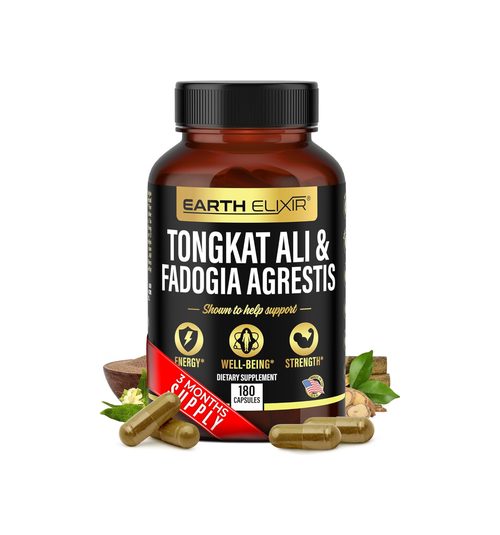
- Fadogia Agrestis is a West African shrub that has become popular alongside Tongkat Ali. Human research on it is very limited, and some animal studies raised concerns about effects on testicular tissue at high doses. It's worth being cautious and talking to a doctor before long-term use.
- BioPerine (black pepper extract) is added to support absorption of other ingredients. It can also affect how some medications are absorbed.
Combinations mean less of each serving is Tongkat Ali itself, which matters if you're trying to hit a specific studied dose.
Side Effects and Who Should Be Careful
At typical doses, Tongkat Ali has been reasonably well tolerated in studies. Side effects reported include restlessness, trouble sleeping, irritability, and feeling overheated — more often at higher doses.
Two safety issues deserve particular attention:
- Contamination. Independent testing of Tongkat Ali products has found heavy metals, including mercury and lead, in some products. Choose brands that publish third-party test results.
- Hormones. Because it's studied for effects on testosterone, it's not recommended for anyone under 18, during pregnancy or breastfeeding, or with hormone-sensitive conditions (such as prostate cancer) without medical guidance. It may also interact with medications for blood pressure, blood sugar, or immune suppression.
Tongkat Ali and Other Men's Health Supplements
Tongkat Ali is often compared with Shilajit, another traditional men's tonic that's also been studied in relation to testosterone. They're sometimes taken together; the same advice applies — start one at a time so you can tell what's doing what. For a full side-by-side, see Tongkat Ali vs. Shilajit.
Buyer's Checklist
- Latin name Eurycoma longifolia on the label.
- Eurycomanone percentage stated, or a named research extract.
- An extraction ratio that's plausible rather than eye-catching.
- Third-party testing for heavy metals.
- If it's a combination formula, know how much Tongkat Ali is actually in each serving.
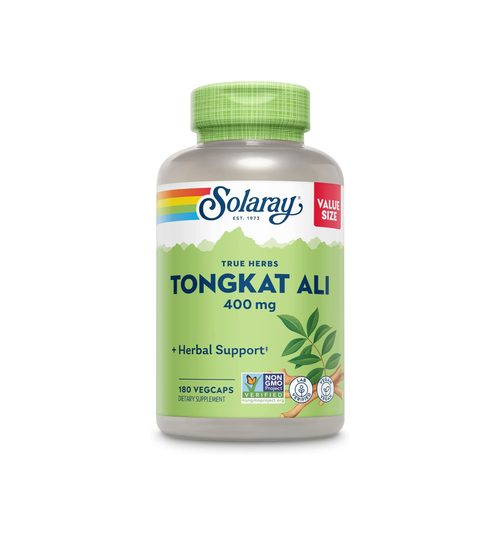
Below are four Tongkat Ali products on HighIQ Nootropics, ranging from a 1,020mg complex to a concentrated 200:1 extract with BioPerine — worth comparing on standardization first, milligram count second.