Most supplements get judged within a few days of starting them. Bacopa Monnieri isn't built for that kind of test, and understanding why is the key to using it well — and to not wasting money on a bottle you quit after a week.
What Is Bacopa Monnieri?
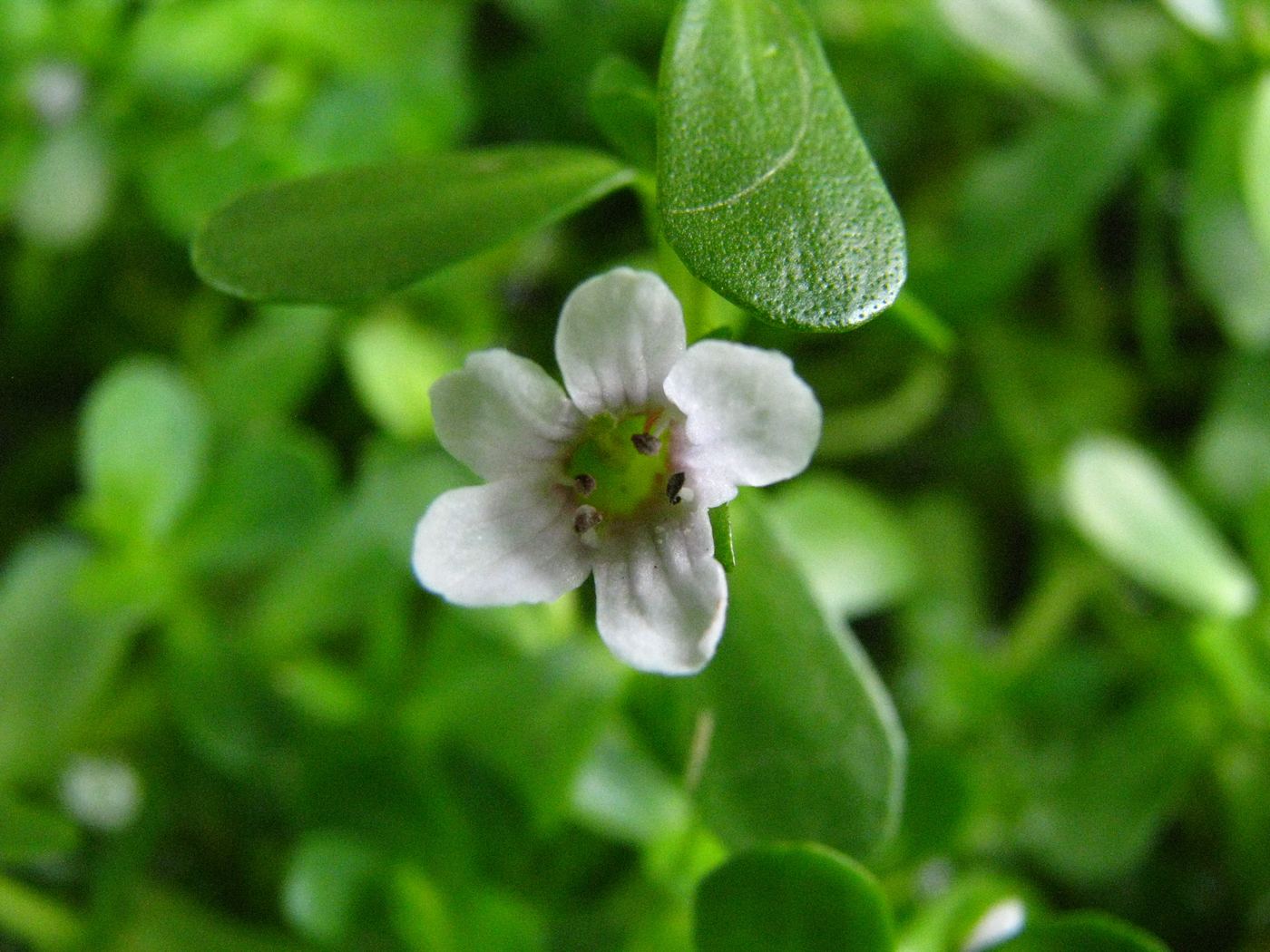
Bacopa Monnieri, known in Ayurveda as Brahmi, is a small creeping herb that grows in wet, marshy ground across India, Southeast Asia, and other warm regions. It has been used in Indian herbal medicine for centuries and is traditionally associated with memory, learning, and a calm mind — Ayurvedic texts class it as a medhya rasayana, a herb for the intellect.
Its active compounds are a group of saponins called bacosides. Researchers believe they support communication between nerve cells and have antioxidant activity in the brain, although exactly how Bacopa produces its effects is still being studied.
One naming trap: "Brahmi" is also used in parts of India for a completely different herb, Gotu Kola (Centella asiatica). If a product says only "Brahmi," check the Latin name on the label to make sure you're getting Bacopa monnieri.
What the Research Actually Looks At
Compared with most herbal nootropics, Bacopa has a relatively deep bench of human research — multiple randomized, placebo-controlled trials and several reviews that pooled them together. The outcomes studied most often are memory-related: how well people retain new information, how quickly they learn word lists, and speed of processing visual information. Reviews of this research have generally described the effects on memory as modest but real in the studies done so far.
Two important caveats: the studies are mostly short (around 12 weeks), and they've mostly used specific standardized extracts. Results from those extracts don't automatically carry over to an unstandardized powder with no stated bacoside content.
Why It Takes So Long
Studies on Bacopa consistently measure outcomes after 8 to 12 weeks of consistent daily use, not after a single dose. This lines up with how it's traditionally used in Ayurvedic practice — as a herb taken steadily over a season, not an as-needed pick-me-up.
What this means in practice:
- Weeks 1–2: most people notice nothing, or only side effects like mild stomach upset or drowsiness. This is where most people quit.
- Weeks 4–8: some people report subtle changes — often described as feeling calmer or recalling things more easily — though these reports are subjective.
- Week 12: the time point most studies use to measure results.
If you take Bacopa for a week, feel nothing, and stop, you haven't really tested it by the standard the research itself uses. If you're not prepared to commit to two to three months of daily use, a faster-acting option like L-Theanine or Rhodiola Rosea may suit what you're looking for better.
How Much to Take
Studied doses generally range from 300mg to 450mg per day of a standardized extract, usually taken once daily. "Standardized" is the operative word. Bacopa products vary widely in strength, and there are three different kinds of numbers you'll see on labels:
| Label says | What it means | How useful it is |
|---|---|---|
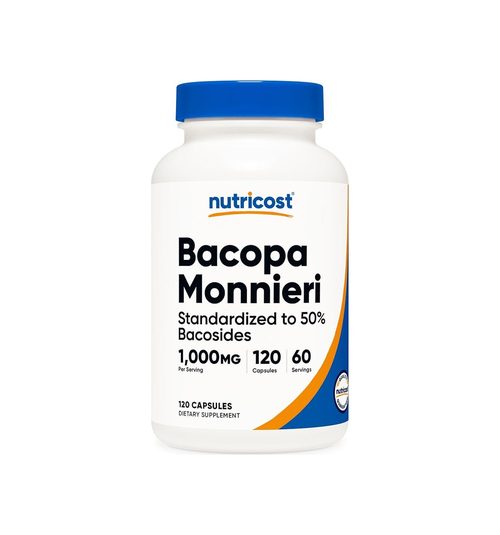
| "Standardized to 50% bacosides" | Half the extract by weight is measured bacosides | Most useful — directly comparable to research extracts |
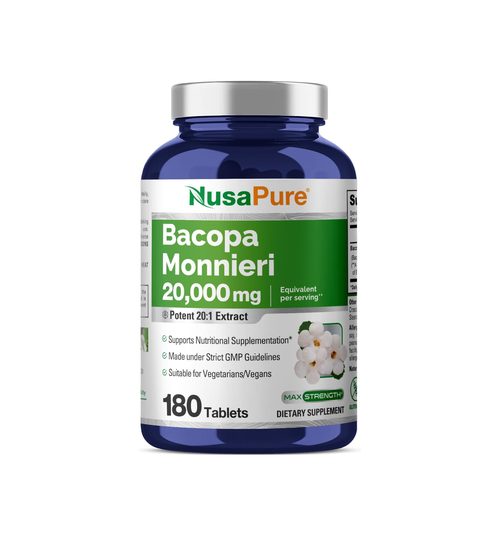
| "20:1 extract" | Concentrated from 20× its weight in raw herb | Moderately useful — a manufacturing ratio, not a measured compound content |
| "Bacopa leaf powder 1,000mg" | Dried, ground herb, not extracted | Least useful — bacoside content unknown and much lower per mg |
A product that states a bacoside percentage gives you something to compare against research dosing. A product that just says "Bacopa" with a milligram count doesn't — and more milligrams of plain powder isn't the same as a smaller dose of a standardized extract.
How to Take It: Food, Fat, and Timing
- Take it with a meal. Bacopa's most common complaint is nausea, cramping, or loose stools when taken on an empty stomach. Food usually fixes it.
- Include some fat. Bacosides are fat-soluble, and Bacopa was traditionally prepared in ghee (clarified butter). Taking it alongside a meal that contains some fat is a simple, low-effort habit.
- Consider evening dosing. Some people find Bacopa makes them a little tired or relaxed. If that's you, move it to dinner.
- Be consistent. Because its effects build over weeks, missing days matters more than the exact time of day.
Side Effects and Who Should Be Careful
The side effects reported most often in studies are digestive — nausea, stomach cramps, and increased bowel movements — plus occasional fatigue or dry mouth. These are usually mild and often improve with food or after the first couple of weeks.
Talk to a doctor before starting Bacopa if you:
- Are pregnant or breastfeeding (not enough safety data).
- Take thyroid medication — some animal research suggests Bacopa may affect thyroid hormone levels.
- Take sedatives, antidepressants, or medications that affect acetylcholine (including some Alzheimer's and bladder medications).
- Have a slow heart rate, stomach ulcers, or are scheduled for surgery.
As with any herb, quality matters: Bacopa grows in water and can absorb heavy metals from its environment, so brands that publish third-party test results are worth favoring.
Stacking Bacopa With Other Supplements
Bacopa is commonly paired with Lion's Mane as a long-term "memory stack," and sometimes with L-Theanine for a calmer daily routine. If you're new to both, start Bacopa alone for the first few weeks — its digestive side effects are easier to identify when it's the only new thing you're taking. For a side-by-side look at the two, see Lion's Mane vs. Bacopa Monnieri.
Buyer's Checklist
- Latin name Bacopa monnieri on the label (not just "Brahmi").
- A stated bacoside percentage — or at minimum an extraction ratio.
- A daily serving that lands in the 300–450mg standardized-extract range, or can be adjusted to it.
- Third-party testing for heavy metals, if the brand publishes it.
- Enough capsules for at least 8–12 weeks, since that's the trial period that matters.
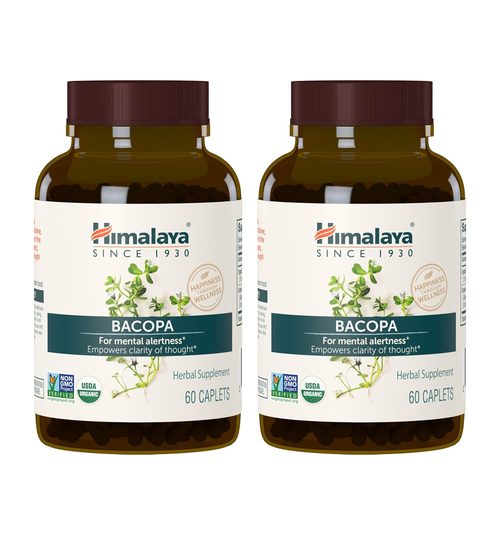
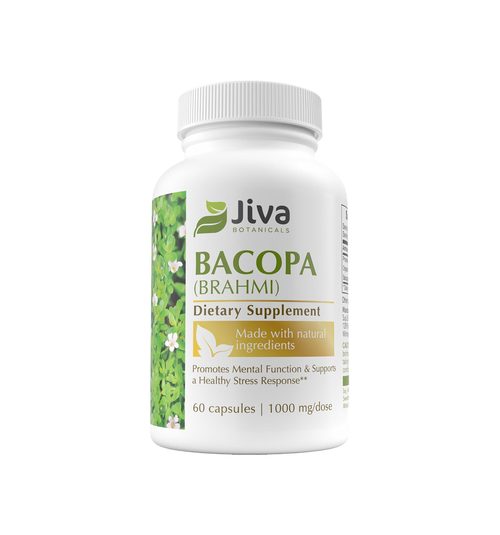
Below are four Bacopa Monnieri products on HighIQ Nootropics, ranging from a straightforward organic caplet to a heavily concentrated 20:1 extract and a 50%-bacoside standardized capsule — worth comparing on standardization before dose.