Rhodiola Rosea gets filed under "adaptogen," a word that gets used loosely in supplement marketing. It's worth being specific about what that actually means for this particular root, what it's realistically used for, and what to check on a label — because Rhodiola has one of the more serious authenticity problems of any herb on this site.
What Is Rhodiola Rosea?
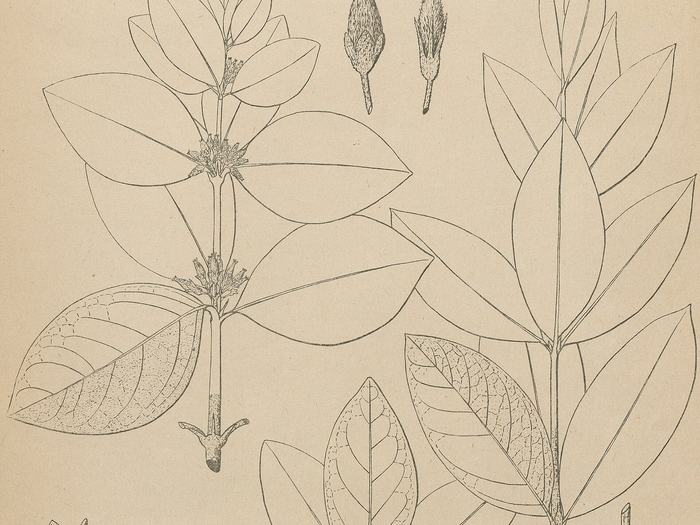
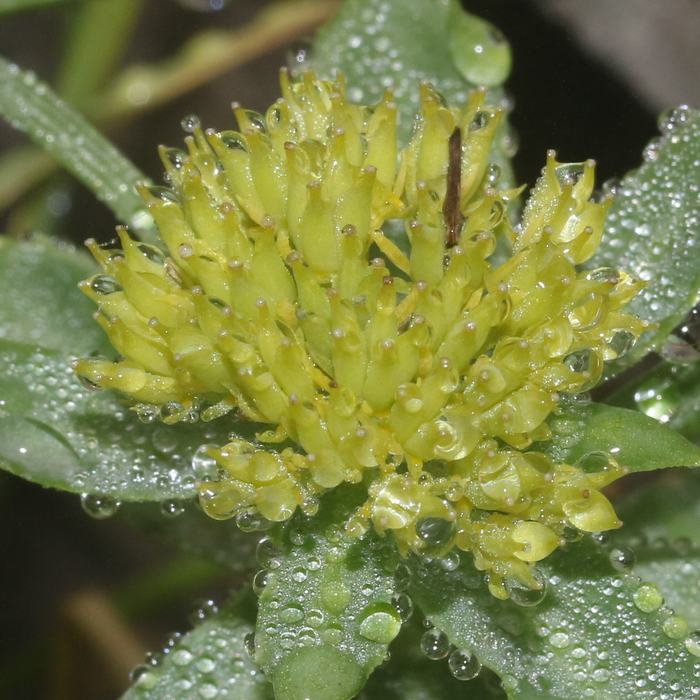
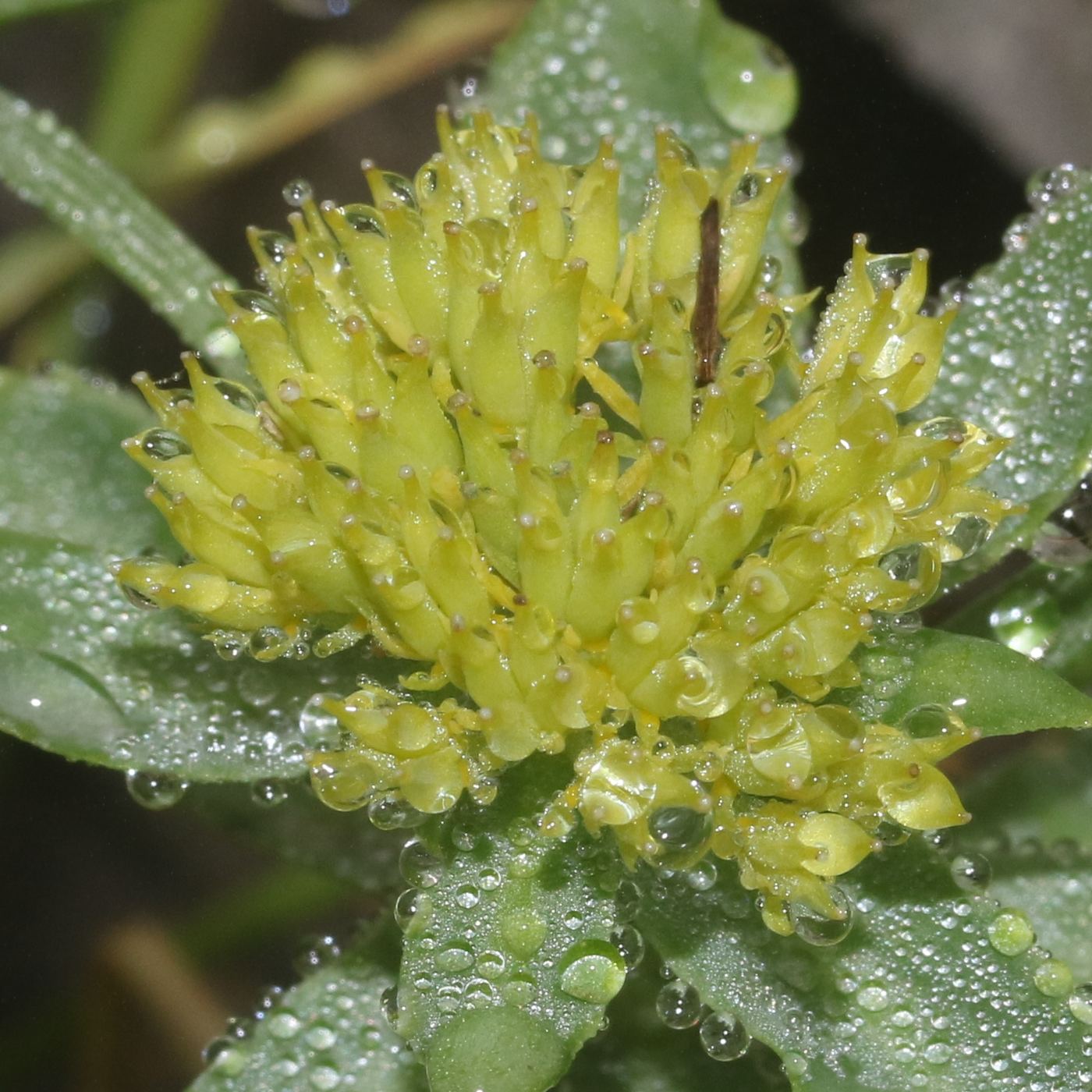
Rhodiola Rosea is a flowering plant whose root grows in cold, high-altitude regions of Europe and Asia — the Arctic, Scandinavia, the mountains of Russia and Central Asia. Its nickname "golden root" comes from the color and the rose-like scent of the freshly cut root. It's been used traditionally in those regions to help people handle physical and mental stress, particularly during demanding conditions like long winters, heavy labor, or military service.
Its two main groups of active compounds are rosavins (rosavin, rosarin, and rosin) and salidroside. Rosavins are considered unique to Rhodiola rosea specifically, which matters for spotting substitutes (more on that below).
What "Adaptogen" Actually Means
"Adaptogen" is a term coined in Soviet-era research for substances thought to help the body resist a range of stressors without pushing it out of balance in any one direction. It isn't a medical classification, and supplement companies use it very loosely. For Rhodiola specifically, the practical meaning is narrower: it's mostly studied in the context of stress-related fatigue — the tired, flat, "running on empty" feeling that comes with a demanding stretch of work, study, or training.
What the Research Actually Looks At
Human studies on Rhodiola have looked at people under specific kinds of stress — students during exams, night-shift workers, people reporting burnout-type fatigue — and measured things like self-reported fatigue, mental performance on tasks, and mood. Some trials have reported benefits; others found little difference from placebo. Reviews generally describe the evidence as promising but mixed, with study quality varying a lot.
Unlike Bacopa, some Rhodiola studies looked at effects within days or after a single dose, not only after months, which is part of why people tend to use it during a stressful period rather than as a permanent fixture.
Rosea vs. Other Rhodiola Species
There are many species of Rhodiola, and Rhodiola rosea is both the most researched and among the most expensive. Independent market testing has repeatedly found products sold as "Rhodiola rosea" that contained a cheaper related species (such as Rhodiola crenulata or Rhodiola sachalinensis), or that contained little or no rosavin at all.
Because rosavins are characteristic of R. rosea, a label that specifies rosavin content is a much better sign than one that lists only salidroside — salidroside occurs in other Rhodiola species too, and it can also be made synthetically.
The 3:1 Ratio, Explained
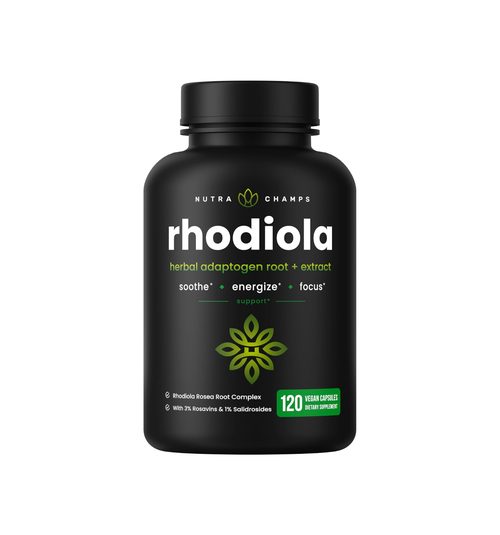
Much of the clinical research on Rhodiola uses extracts standardized to about 3% rosavins and 1% salidroside — a roughly 3:1 ratio that mirrors the root's natural composition. That's why the ratio shows up on so many labels. How to read what you'll see:
| Label says | What it tells you |
|---|---|
| "3% rosavins, 1% salidroside" | Matches the standardization most research used — the best signal |
| "Standardized to salidroside" only | Could be a different species or a spiked extract — less reassuring |
| "Standardized extract" with no numbers | You're being asked to trust the brand |
| Root powder, no standardization | Real Rhodiola maybe, but compound content unknown |
How Much to Take, and When
Common doses range from 200mg to 600mg per day of a standardized extract. A few practical points:
- Start low. Some research suggests more isn't always better with Rhodiola — moderate doses have sometimes performed as well as or better than high ones. Starting around 200mg and adjusting is sensible.
- Take it early. Many people find Rhodiola mildly stimulating, so it's usually taken in the morning or early afternoon, often before breakfast. Taking it in the evening can interfere with sleep for some people.
- Consider cycling. Because it's typically used around stressful stretches, many people take it for a few weeks and then take a break, rather than using it indefinitely. There's no firm research-backed cycle, but occasional breaks make it easier to judge whether it's still doing anything.
Rhodiola vs. Ashwagandha
These are the two adaptogens people compare most often. As a rough rule of thumb: Rhodiola tends to be described as energizing and is reached for when stress shows up as fatigue and brain fog; Ashwagandha tends to be described as calming and is reached for when stress shows up as feeling wired, anxious, or unable to sleep. Individual responses vary, and they're sometimes taken together (Rhodiola in the morning, Ashwagandha in the evening).
Stacking Rhodiola With Other Supplements
- With caffeine: common, but since both can be stimulating, start with a smaller amount of each.
- With L-Theanine: a popular pairing to smooth out any edginess — see our L-Theanine guide, or Rhodiola vs. L-Theanine for stress.
- With Bacopa: sometimes combined for a study or exam season, though they work on very different timelines — see our Bacopa guide.
Side Effects and Who Should Be Careful
At typical doses Rhodiola is generally well tolerated. Reported side effects include dizziness, dry mouth, irritability, and trouble sleeping (especially if taken late in the day).
Check with a doctor before taking it if you:
- Take antidepressants or other medication for mood — Rhodiola may interact with them.
- Have bipolar disorder, since stimulating supplements can be a concern.
- Take medication for blood pressure or blood sugar, as Rhodiola may affect both.
- Are pregnant or breastfeeding (not enough safety data).
- Have an autoimmune condition, since some adaptogens are thought to stimulate the immune system.
Buyer's Checklist
- Latin name Rhodiola rosea, specifically.
- Rosavin content stated (ideally ~3% rosavins / 1% salidroside).
- A dose that lets you start around 200mg.
- Third-party testing for identity and purity, where available.
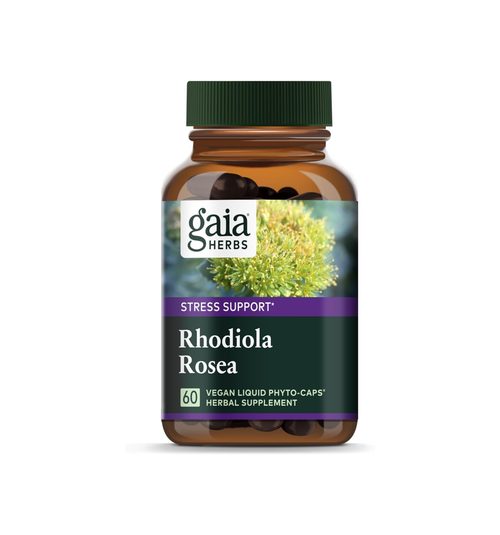
- Format that suits you — powder capsules are standard; liquid-extract capsules are an alternative.
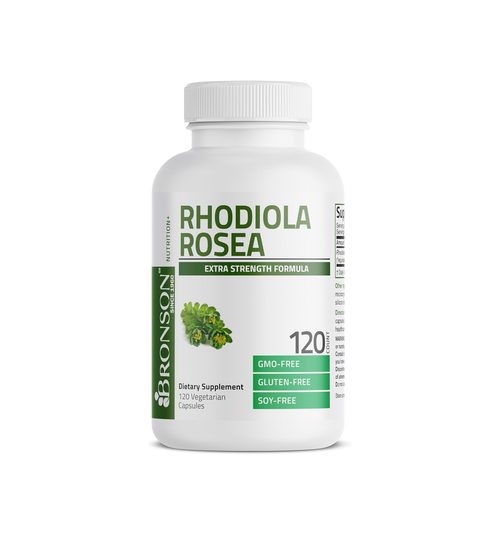
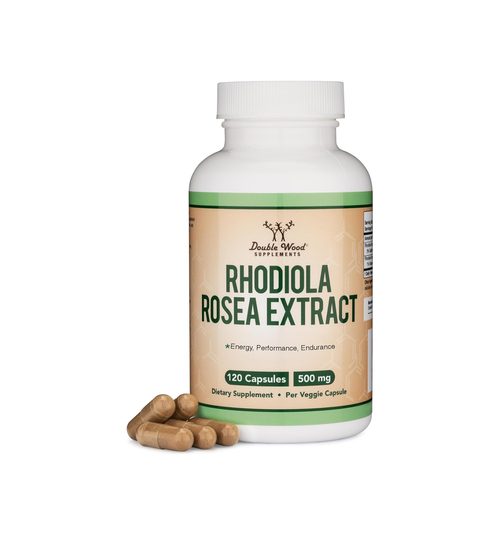
Below are four Rhodiola Rosea products on HighIQ Nootropics — a mix of standard extra-strength capsules, a single-ingredient 500mg option, a liquid-extract format, and one standardized specifically to the studied 3%/1% ratio.